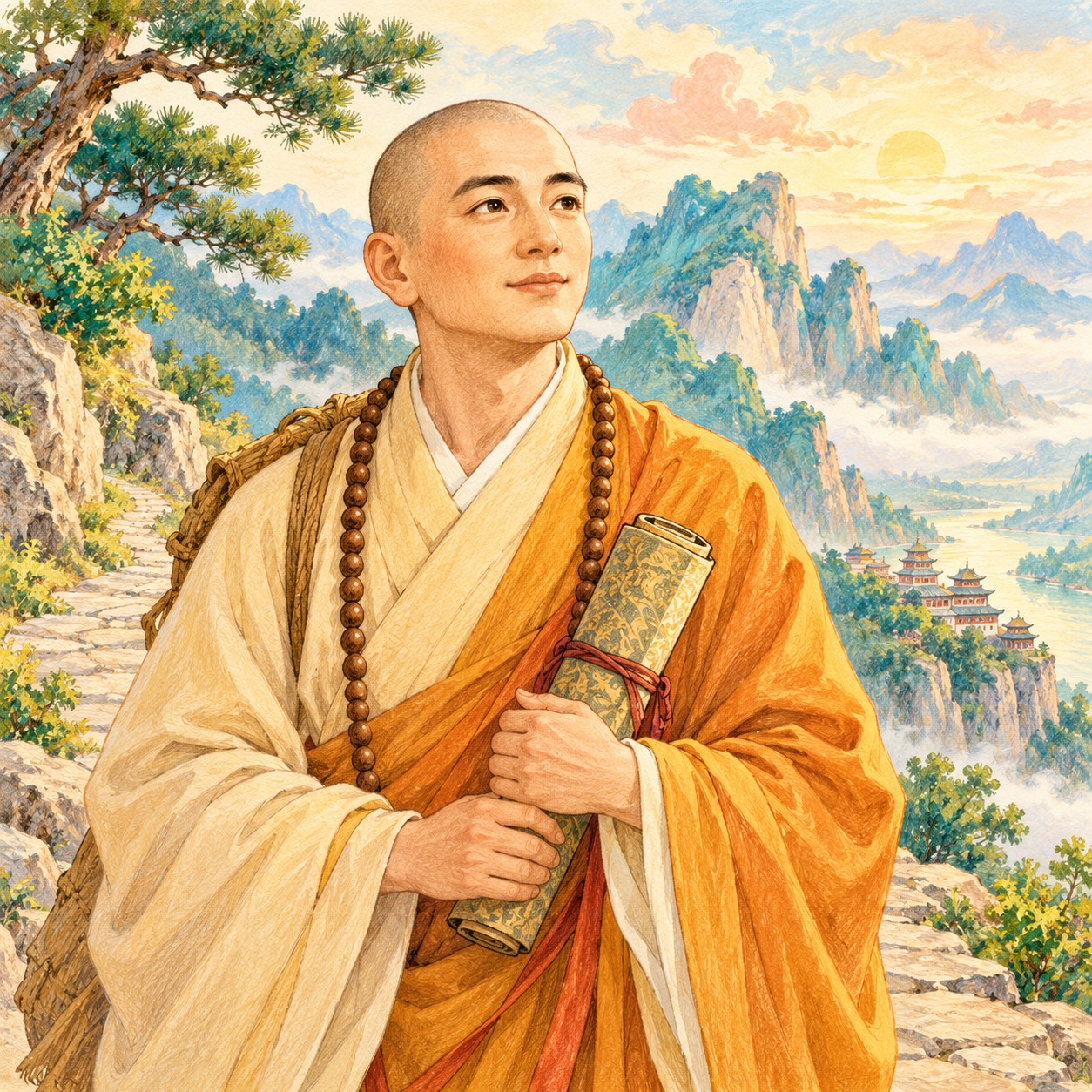
This is a fixed demonstration, not your personal result. The answer connections and exercises use the displayed sample answers. Literary character passages are shared editorial content.
One question to explore is how “Shared duty” works alongside “Observe & prepare”. Start with the answer pairs below, then use the character as a second lens.
YOUR PERSONAL READING
How your choices work together.
Your compass meets your first instinct
Your pattern combines “Shared duty” with “Observe & prepare”. These two preferences recur across the situations you answered. They describe a starting approach, not a skill or a guarantee of what you will do.
Question 1: A stranger offers a faster road, but your companions want to keep the agreed route.
Keep the promise we made together.
Question 2: The bridge is damaged, and daylight is fading. What is your first move?
Make a repair plan with the group.
Where this could matter: Your companions want to keep a promise, but a new route needs a quick decision. Your first preference can guide what you protect; the second can guide how you handle the situation. Try writing one action that respects both, and name the cost you would accept. If both cannot fit, decide which matters more in this particular setting.
Compare all choices behind this connectionQuestion 1: A stranger offers a faster road, but your companions want to keep the agreed route.
Keep the promise we made together.
Question 5: An old promise now conflicts with an opportunity you deeply want.
Keep the promise and pass on this opportunity.
Question 9: A village asks you to stay, but the group plans to leave.
Continue with the responsibility I accepted.
Question 2: The bridge is damaged, and daylight is fading. What is your first move?
Make a repair plan with the group.
Question 6: You hear an unfamiliar sound beyond the campsite.
Gather supplies before investigating.
Question 10: Your map ends at the edge of the mountains.
Prepare supplies and an alternative plan.
This is a reflection prompted by your choices, not a finding about your motives.
Your trust meets your voice
Your pattern combines “Give trust a chance” with “Open challenge”. These two preferences recur across the situations you answered. They describe a starting approach, not a skill or a guarantee of what you will do.
Question 3: At a safe, organized stop, a fellow traveler invites you to join their table. You would…
Sit with them and see how the conversation goes.
Question 4: A gatekeeper refuses entry to a weary traveler. You would…
Challenge the rule in front of the crowd.
Where this could matter: Someone new offers help, and the group disagrees about accepting it. Your first preference can guide what you protect; the second can guide how you handle the situation. Try writing one action that respects both, and name the cost you would accept. If both cannot fit, decide which matters more in this particular setting.
Compare all choices behind this connectionQuestion 3: At a safe, organized stop, a fellow traveler invites you to join their table. You would…
Sit with them and see how the conversation goes.
Question 7: Someone who once misled the group wants to return.
Give a cautious chance to rebuild trust.
Question 11: At a supervised community event, someone from a rival team offers to work with yours. You would…
Work together with regular check-ins.
Question 4: A gatekeeper refuses entry to a weary traveler. You would…
Challenge the rule in front of the crowd.
Question 8: Your closest companion dismisses your concern.
Insist we address it before taking another step.
Question 12: The group keeps asking you to do more than you can carry.
Refuse the extra load clearly and immediately.
This is a reflection prompted by your choices, not a finding about your motives.
A pattern to test in a different setting
Question 1: A stranger offers a faster road, but your companions want to keep the agreed route.
Keep the promise we made together.
Question 9: A village asks you to stay, but the group plans to leave.
Continue with the responsibility I accepted.
Your choices here stay within a narrower part of your compass. This is a pattern in these questions, not proof that you always act this way. Ask whether a different relationship or lower stakes would change your answer.
Two experiments built from your answers.
1. A small alternative to question 1
Question 1: A stranger offers a faster road, but your companions want to keep the agreed route.
Keep the promise we made together.
Try: In a safe, low-stakes version of this situation, consider “Ask the group to reconsider the route.” instead. Do not use this exercise to override safety, consent or an important obligation.
Record: What did you expect? What happened? Did the alternative help, cost you something, or simply feel wrong for this setting? Keep your original approach if it serves the situation better.
2. A small alternative to question 2
Question 2: The bridge is damaged, and daylight is fading. What is your first move?
Make a repair plan with the group.
Try: In a safe, low-stakes version of this situation, consider “Test one careful step and adjust.” instead. Do not use this exercise to override safety, consent or an important obligation.
Record: What did you expect? What happened? Did the alternative help, cost you something, or simply feel wrong for this setting? Keep your original approach if it serves the situation better.
Personal sections are assembled from your actual choices. The literary portrait and its source notes are shared with others who meet this character.
01 / A LITERARY LENS
A portrait to question, not inherit.
You want a journey to mean something beyond arriving. A promise, a principle, or a person can keep you moving when certainty disappears.
Which principle needs a practical boundary to survive?
In the story
Sanzang releases a potential companion and insists on a moral limit after the robbery encounter, placing the mission and an explicit principle ahead of convenience. He receives another companion into the pilgrimage and continues toward its religious purpose; the reading emphasizes continuity and welcome rather than a claim of practical infallibility.
Where the analogy stops: A commitment to compassion does not guarantee sound judgment: the White Bone episode in chapter 27 exposes mistaken readings of appearances. His use of religious authority also differs from equal, consent-based modern advice.
This context concerns the fictional portrait. It does not assign the character’s motives, conduct or fate to you.
Where the two readings differ
Tang Sanzang and Guanyin are most separated here:
Your trust: your response average is toward Give trust a chance. The Tang Sanzang portrait has a working placement toward Give trust a chance; Guanyin is between Question the offer and Give trust a chance. These are editorial placements; a middle position may record limited evidence rather than an observed balanced trait. Compare the source notes before adopting either reading.
Your first instinct: your response average is toward Observe & prepare. The Tang Sanzang portrait has a working placement between Observe & prepare and Act & adapt; Guanyin is between Observe & prepare and Act & adapt. These are editorial placements; a middle position may record limited evidence rather than an observed balanced trait. Compare the source notes before adopting either reading.
You do not inherit a character’s gender, fate, relationships or moral choices. No diagnosis, compatibility or supernatural claim is made.
02 / YOUR ANSWER TRAIL
Every reading has a trail.
Your compass
Your average position leans toward Shared duty.
See all 3 answers behind this reading
QUESTION 1 / THE SHORTCUT
A stranger offers a faster road, but your companions want to keep the agreed route.
Keep the promise we made together.
QUESTION 5 / THE PROMISE
An old promise now conflicts with an opportunity you deeply want.
Keep the promise and pass on this opportunity.
QUESTION 9 / THE INVITATION
A village asks you to stay, but the group plans to leave.
Continue with the responsibility I accepted.
Your first instinct
Your average position leans toward Observe & prepare.
See all 3 answers behind this reading
QUESTION 2 / THE BROKEN BRIDGE
The bridge is damaged, and daylight is fading. What is your first move?
Make a repair plan with the group.
QUESTION 6 / THE STRANGE SOUND
You hear an unfamiliar sound beyond the campsite.
Gather supplies before investigating.
QUESTION 10 / THE UNFINISHED MAP
Your map ends at the edge of the mountains.
Prepare supplies and an alternative plan.
Your trust
Your average position leans toward Give trust a chance.
See all 3 answers behind this reading
QUESTION 3 / THE LANTERN
At a safe, organized stop, a fellow traveler invites you to join their table. You would…
Sit with them and see how the conversation goes.
QUESTION 7 / THE SECOND CHANCE
Someone who once misled the group wants to return.
Give a cautious chance to rebuild trust.
QUESTION 11 / THE GIFT
At a supervised community event, someone from a rival team offers to work with yours. You would…
Work together with regular check-ins.
Your voice
Your average position leans toward Open challenge. This dimension differs from the Tang Sanzang portrait. Treat that part of the character description as a question, not a finding about you.
See all 3 answers behind this reading
QUESTION 4 / THE UNFAIR GATE
A gatekeeper refuses entry to a weary traveler. You would…
Challenge the rule in front of the crowd.
QUESTION 8 / THE DISAGREEMENT
Your closest companion dismisses your concern.
Insist we address it before taking another step.
QUESTION 12 / THE FINAL REQUEST
The group keeps asking you to do more than you can carry.
Refuse the extra load clearly and immediately.
Every answer has equal weight within its dimension; all four dimensions have equal weight in matching. The source notes support an editorial portrait, not a validated psychological score. Mixed answers describe different situations and are not treated as dishonesty.
03 / STRENGTHS TO EXPLORE
What your choices make room for.
From your actual responses
In “THE SHORTCUT” you chose “Keep the promise we made together.”. Across the 3 questions about your compass, your pattern leaves room for Shared duty. Consider where that preference helps you make a useful contribution; the choices support a preference, not a measured skill.
Through the character lens
You preserve purpose when everyone else is focused on the next obstacle.
How it helps in practice
You can keep a group connected to the reason its work matters when practical frustrations begin to dominate. Recalling a freely chosen purpose may help people distinguish a difficult stage from a task they no longer genuinely wish to pursue.
The contribution people may notice
Your willingness to treat people as capable of change can create room for a constructive beginning. With clear expectations, that generosity may help a mistake become something a person can address instead of a permanent identity assigned by the group.
The character passages are shared literary prompts. They are not independently established findings about you.
04 / POSSIBLE BLIND SPOTS
Where context could change the picture.
From your actual responses
In “THE UNFAIR GATE” you chose “Challenge the rule in front of the crowd.”. Try one low-stakes situation where the other end of your voice would be useful. A blind spot is a possibility to examine, not something these few answers establish.
Through the character lens
Believing in someone does not require ignoring evidence. Make kindness compatible with a boundary.
When the pattern goes too far
A hopeful interpretation may lead you to explain away a pattern that deserves attention. Separate what someone has promised from what they have repeatedly done, and let the evidence shape the amount of responsibility you are willing to share.
A small adjustment to try
Holding to a principle can become exhausting if you believe you must embody it without ordinary needs. Discuss the practical conditions that make your commitment sustainable, including rest, resources, and the right to decline a particular request.
05 / WITH OTHER PEOPLE
Let the differences start a conversation.
Let others see both your gift and its limits. Believing in someone does not require ignoring evidence. Make kindness compatible with a boundary. Ask someone close to you what support would make room for both your needs.
Ask someone which of your actual answers surprised them, and why. A character label cannot tell you whom to trust, date, hire or avoid.
06 / SMALL EXPERIMENTS
Try something your answers can test.
Return to one situation in your answer trail. Keep your original choice, then describe one circumstance that would make another option useful. Try that alternative only in a low-stakes setting and notice what changes.
Which principle needs a practical boundary to survive?
Name one situation this week where this pattern helped, and one where it cost you something.
Ask a trusted person for an example that challenges this portrait. Keep the parts that help.
Which principle needs a practical boundary to survive?
07 / SOURCE NOTES
Why this character is drawn this way.
Declared reading: Journey to the West, Chinese novel, cited by chapter. Rebellion, pilgrimage service and later change are not treated as one unchanging stage.
A commitment to compassion does not guarantee sound judgment: the White Bone episode in chapter 27 exposes mistaken readings of appearances. His use of religious authority also differs from equal, consent-based modern advice.
Chapter 14: releasing Wukong and disputing the killing of the robbers
Sanzang releases a potential companion and insists on a moral limit after the robbery encounter, placing the mission and an explicit principle ahead of convenience.
Chapter 19: receiving Bajie and continuing the westward mission
He receives another companion into the pilgrimage and continues toward its religious purpose; the reading emphasizes continuity and welcome rather than a claim of practical infallibility.
The coordinates are editorial interpretations of these scenes. Different scholars, translations or stages of a character’s story can support another reading. Evidence notes are not psychometric validation.
Source review · edition 4
A commitment to compassion does not guarantee sound judgment: the White Bone episode in chapter 27 exposes mistaken readings of appearances. His use of religious authority also differs from equal, consent-based modern advice.
The four coordinates are working editorial placements, not values measured from a text. A provisional middle placement records uncertainty; it does not prove a neutral temperament. Evidence annotations are not probabilities and do not change the four equal matching weights.
Journey to the West, Chinese novel, cited by chapter. Rebellion, pilgrimage service and later change are not treated as one unchanging stage.
This is a contemporary interpretation of Tang Sanzang in the source story, rather than a complete account of the character. Your result describes how your choices resemble this reading; it does not assign the character’s actions or morality to you.
Questions, profiles, interpretations and illustrations were developed with AI assistance. No modern screen-adaptation visual assets are used. This prototype has not been validated as a psychological instrument.